From school bags to ambulances, from clean water to women’s skill centres — every program Samarth Foundation runs is grounded in direct, long-term community need.
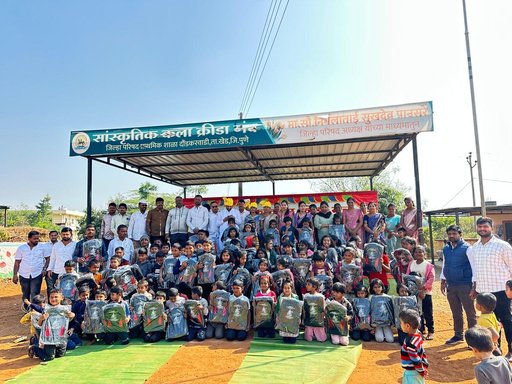
Since 2016, Samarth Foundation has distributed thousands of school bags, stationery sets, and uniforms to students across Khed Taluka. The initiative targets children from Below Poverty Line (BPL) families where the cost of school supplies forces difficult choices. Beyond materials, the foundation has facilitated device distribution — tablets and computers — at rural schools to bridge the digital divide.
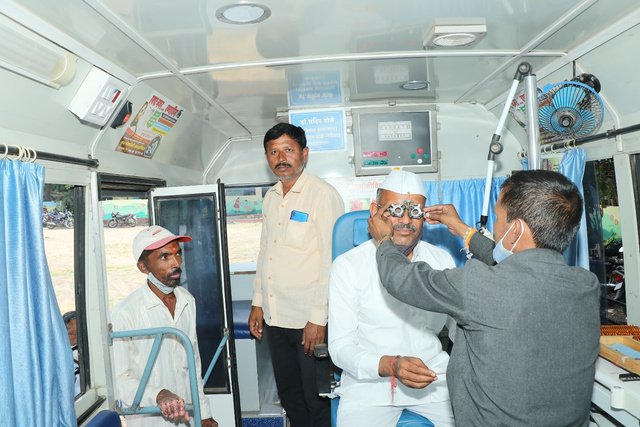
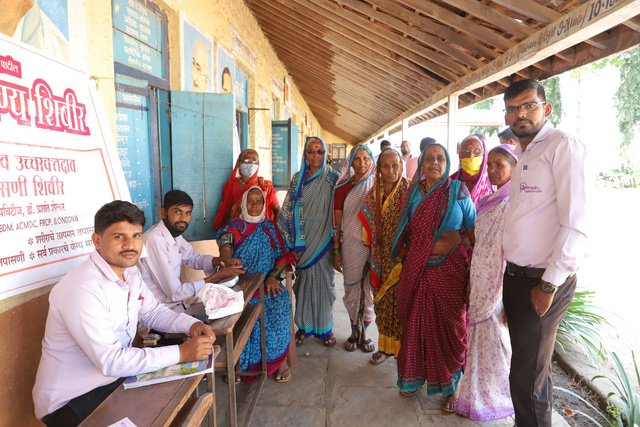
The flagship Maha Arogya Shibir (Great Health Camp) brings together specialist doctors — ophthalmologists, dentists, gynaecologists, and general physicians — into remote villages for single-day comprehensive camps. The foundation deployed one ambulance in 2018 for emergency transport, and in 2024 launched the Arogya Sewika program — 50 trained female health workers equipped with tablets for doorstep digital health consultations.
The Mahila Asmita Bhavan is a dedicated women’s centre that runs tailoring, embroidery, and entrepreneurship training for rural women. The foundation also runs health awareness programs specifically for women — menstrual hygiene, maternal health, and nutritional counselling — in partnership with local ANMs (Auxiliary Nurse Midwives). Women’s savings groups (Bachat Gat linkages) have been formed in multiple villages.
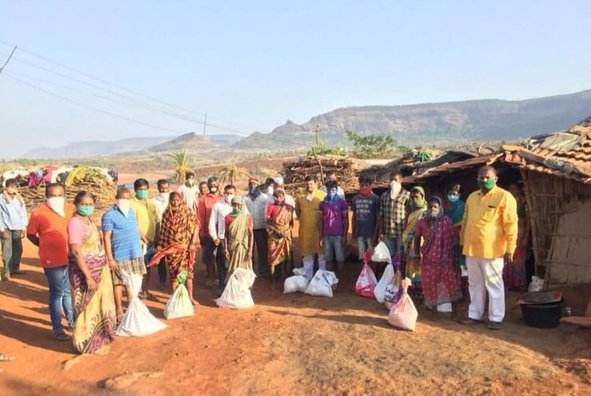
In 2020, when COVID-19 lockdowns stripped farming families of their only income, Samarth Foundation distributed over 7,000 grocery kits across 80+ villages in Khed Taluka — the foundation’s largest single operation. The crisis response team also responds to drought years with water tanker runs and dry ration distribution, and supports families during flood events along the Bhima River basin.
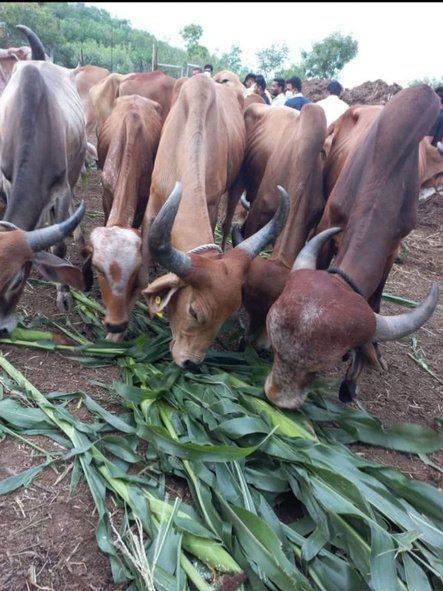
In agrarian Khed Taluka, cattle are livelihood. The foundation runs regular veterinary camps, cattle feeding drives during lean drought months, and awareness campaigns on foot-and-mouth disease prevention. Animal welfare is treated as economic welfare — a sick or dying animal can destroy a small farmer’s entire season.
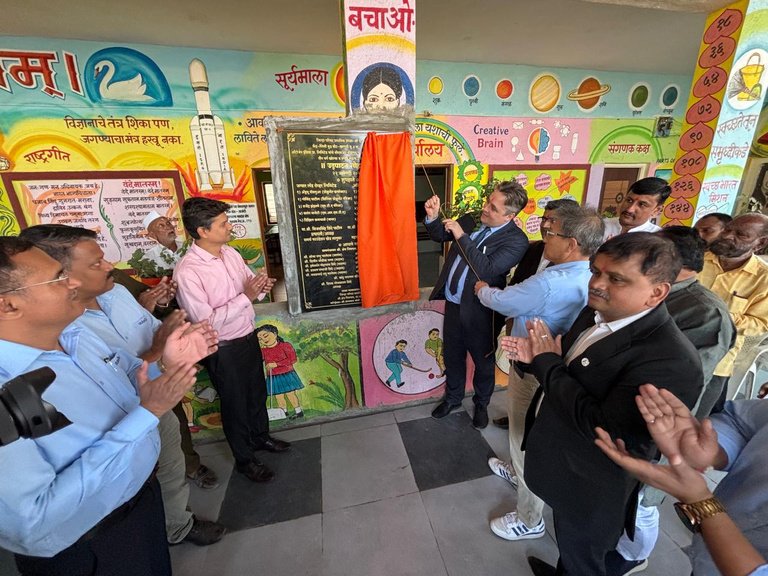
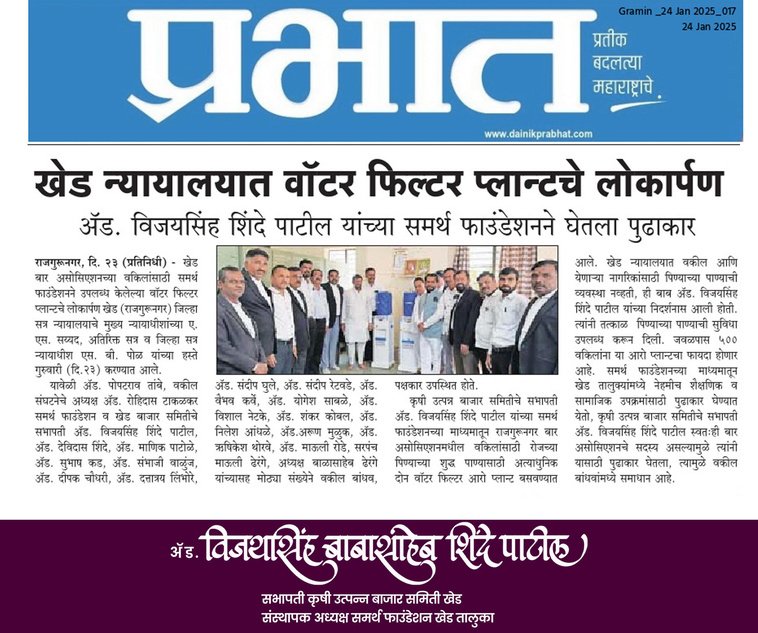
The foundation runs tree plantation drives across Khed Taluka, targeting 1,000+ saplings per season. Solar panel installations at rural schools reduce electricity dependency and save school budgets for books and teachers. Clean drinking water installations — reverse osmosis filter plants — have been set up in three villages, eliminating waterborne illness.
The foundation’s most ambitious initiative — 2025 onwards
Project Samruddhi (Prosperity) is a three-year, three-pillar initiative designed to create sustainable, long-term change in 10 target villages of Khed Taluka. Supported by CSR partnerships and community co-investment.
Repair of village roads and drainage. School building renovation. Public toilet construction. Drinking water pipeline extension to last-mile households ensuring every family has access to safe, piped water.
Construction of school libraries. Provision of laboratory equipment. Teacher training in digital pedagogy. Tablet program for Class 5–8 students. Scholarship fund for meritorious students from BPL families.
Expansion of the Arogya Sewika program to 30 villages. Telemedicine connectivity for remote health consultations. Digital health records for 10,000+ patients. Mobile diagnostic unit with basic pathology.
Total 3-year investment
Whether you want to fund a single school bag drive or partner on a multi-year CSR program, we’re ready to collaborate.